How Alcohol Actually Affects Your Blood Sugar (It's Not What Most People Assume)
Quick Answer: Alcohol initially can cause a mild rise (especially sugary mixed drinks), but as your liver prioritizes metabolizing alcohol over releasing stored glucose, blood sugar can drop several hours later — sometimes overnight. The delayed drop is the bigger, less-known risk than the initial spike.
You’d assume a glass of wine or a mixed drink just adds sugar to the mix. The more important effect actually happens hours later, while your liver is still busy processing the alcohol instead of doing its normal glucose-regulating job.
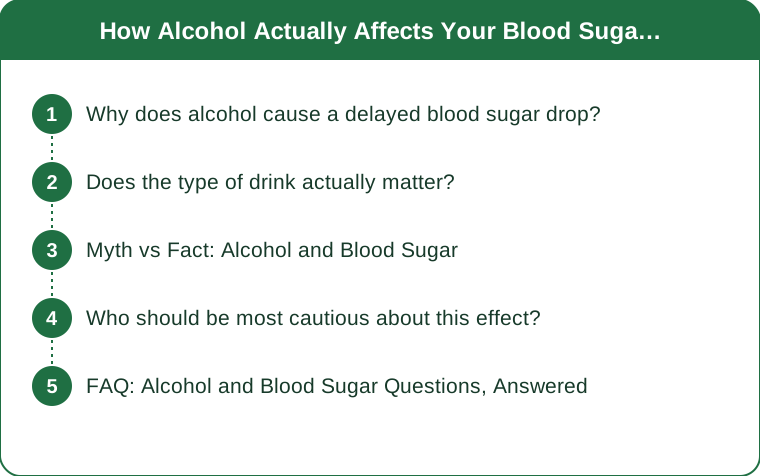
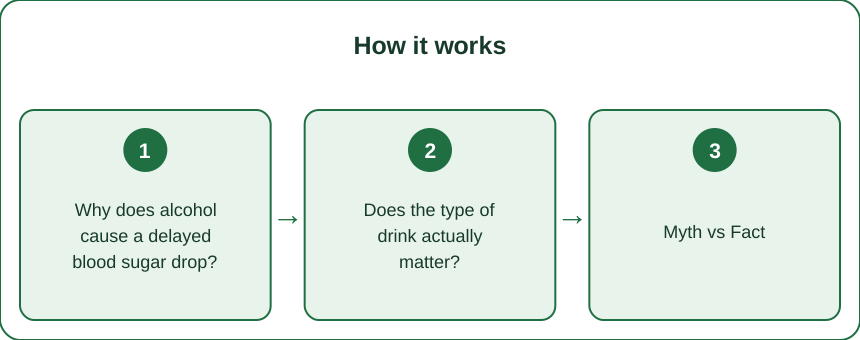
Why does alcohol cause a delayed blood sugar drop?
Your liver treats metabolizing alcohol as a priority job, which means it temporarily deprioritizes releasing stored glucose (glycogen) to maintain steady blood sugar between meals. This effect can last several hours after your last drink, which is why lows sometimes show up overnight rather than during the drinking itself.
This mechanism is the same regardless of drink type — beer, wine, or spirits all trigger this liver prioritization once alcohol is in your system.
Does the type of drink actually matter?
Sugary mixed drinks (margaritas, cocktails with juice or soda) cause a more immediate glucose rise on top of the delayed-drop risk — essentially stacking both effects. Dry wine or spirits with a sugar-free mixer minimize the immediate rise but don’t eliminate the delayed-drop risk, since that’s driven by alcohol metabolism itself, not the mixer.
Beer sits in between — it has carbohydrate content from grain but generally less concentrated sugar than a sweet cocktail.

Myth vs Fact: Alcohol and Blood Sugar
Myth: Only sugary drinks affect blood sugar. Fact: Even sugar-free spirits affect blood sugar through the delayed-drop mechanism, regardless of added sugar content.
Myth: Eating while drinking has no effect on the glucose response. Fact: Food alongside alcohol slows alcohol absorption and provides a glucose buffer, meaningfully reducing both the spike and the later drop risk.
Myth: The blood sugar effect ends once you stop feeling the alcohol’s effects. Fact: The delayed-drop risk can persist for several hours after you feel sober, particularly overnight during sleep when you’re not around to notice symptoms.
Who should be most cautious about this effect?
Anyone managing diabetes with insulin or certain oral medications faces the highest risk, since the delayed drop can compound with medication effects to cause a more severe low, sometimes overnight while asleep — a particularly hard-to-catch scenario.
Eating a balanced snack with protein and carbs before or alongside drinking, and monitoring blood sugar before sleep if you’re on glucose-lowering medication, are commonly recommended precautions. This is general information, not medical advice — anyone on diabetes medication should discuss alcohol specifically with their provider.
FAQ: Alcohol and Blood Sugar Questions, Answered
How long after drinking can blood sugar still drop?
The delayed-drop effect can extend up to 12-24 hours after drinking for some people, though it’s often most pronounced in the first several hours.
Does eating before drinking really help?
Yes — food slows alcohol absorption and provides glucose that buffers against both the spike and the later drop, making it a genuinely useful precaution.
Is it safe to check blood sugar overnight after drinking if I use a CGM?
Generally yes and often recommended for people on glucose-lowering medication, since overnight lows after drinking can otherwise go unnoticed during sleep. This is general information, not medical advice.
TL;DR:
- Alcohol can cause an initial rise but a more significant delayed drop hours later
- Sugary mixed drinks stack an immediate spike on top of the delayed-drop risk
- Eating alongside alcohol meaningfully buffers both effects
- Anyone on glucose-lowering medication should treat alcohol’s delayed drop seriously. This is general information, not medical advice.
Keep Reading
This article is for general informational purposes only and is not medical advice. Always consult a qualified health professional for guidance specific to you.