Does Fruit Actually Spike Blood Sugar the Way Continuous Glucose Monitor Posts Suggest?
Quick Answer: Whole fruit does raise blood glucose, since it contains natural sugar, but the fiber, water content, and specific sugar structure in most whole fruits generally produce a more moderate, slower rise and fall than the same amount of sugar from a refined source, and for most people without diabetes, this normal, moderate glucose response isn’t a health concern — the alarming-looking CGM spike graphs shared online are often from people with existing blood sugar dysregulation or are showing a normal response framed as if it were inherently problematic.
Context about who’s wearing the monitor and what ‘spike’ actually means matters as much as the graph itself.

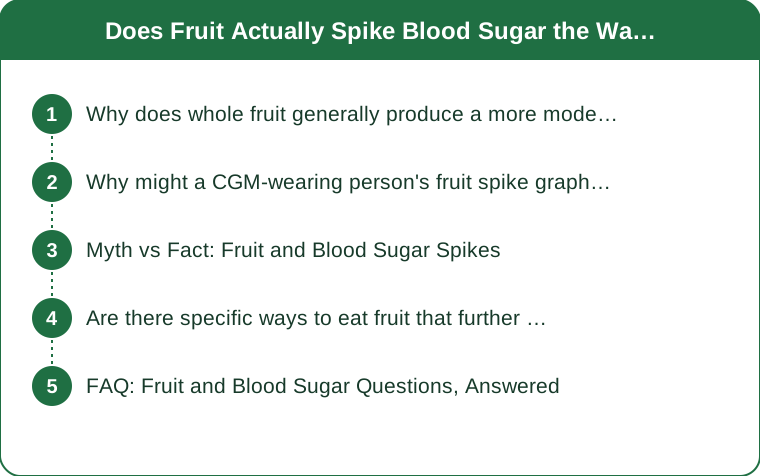
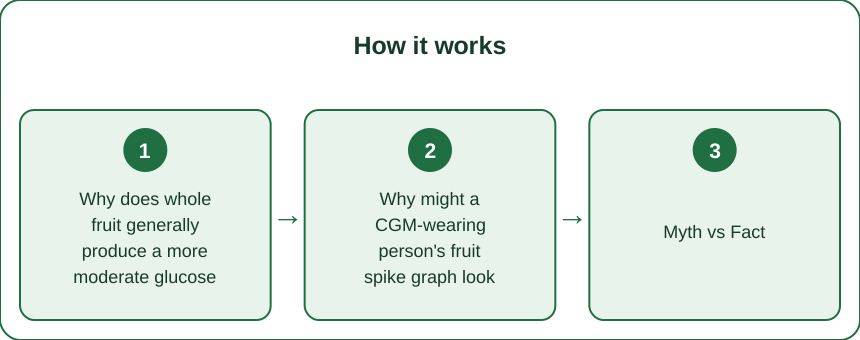
Why does whole fruit generally produce a more moderate glucose response than its sugar content alone might suggest?
The fiber in whole fruit slows the rate at which sugar is absorbed into the bloodstream, producing a more gradual rise and fall rather than the sharper spike associated with refined sugar sources that lack this fiber, and the water content in most fruit further dilutes the effective sugar concentration being consumed in a given serving.
This is the core reason nutrition guidance consistently distinguishes whole fruit from fruit juice or dried fruit (both of which remove water or concentrate sugar), even though all three technically come from the same original source of natural fruit sugar.
Why might a CGM-wearing person’s fruit spike graph look more alarming than it actually is for most people?
Many people sharing CGM spike content are managing an existing condition like prediabetes or diabetes, where blood sugar regulation is already impaired, meaning their glucose response to the same food is genuinely different from — and not representative of — how a metabolically healthy person’s body would respond to the same fruit.
Additionally, what counts as a concerning ‘spike’ is a matter of degree and duration, not simply any measurable rise at all — a moderate, relatively quick return to baseline is a normal, expected glucose response to any carbohydrate-containing food, not inherently a problem, which context is often missing from a shared graph alone.

Myth vs Fact: Fruit and Blood Sugar Spikes
Myth: Any measurable blood sugar rise after eating fruit is inherently unhealthy. Fact: A moderate rise and return to baseline is a normal, expected physiological response to any carbohydrate-containing food.
Myth: All fruit affects blood sugar identically. Fact: Fiber content, ripeness, and whether it’s whole, juiced, or dried all meaningfully change the glucose response.
Myth: A CGM graph from someone managing diabetes represents a typical response for everyone. Fact: Blood sugar regulation differs significantly between metabolically healthy people and those with existing dysregulation.
Are there specific ways to eat fruit that further moderate the glucose response, for anyone who wants to?
Pairing fruit with a source of protein or fat (like fruit with nut butter or plain yogurt) and choosing whole fruit over juice or large amounts of dried fruit are both well-supported strategies for producing an even more moderate glucose response, useful for someone specifically managing blood sugar for a medical reason.
For someone without a specific blood sugar management need, these strategies are optional refinements rather than necessary precautions, since a normal, healthy glucose response to whole fruit isn’t itself a concern requiring active management.
FAQ: Fruit and Blood Sugar Questions, Answered
Is fruit juice meaningfully different from whole fruit for blood sugar response?
Yes — juice removes the fiber and concentrates the sugar, generally producing a faster, sharper glucose rise than the equivalent whole fruit would.
Should someone without diabetes worry about fruit’s effect on blood sugar at all?
Generally no — for someone with normal blood sugar regulation, whole fruit’s moderate glucose response is a normal part of a healthy diet, not something requiring specific monitoring or avoidance.
Does riper fruit spike blood sugar more than less ripe fruit?
Yes, generally — riper fruit has a higher proportion of simple sugars compared to less ripe fruit, which can produce a somewhat quicker glucose response, though the difference is usually modest for most whole fruits.
TL;DR:
- Whole fruit’s fiber and water content produce a more moderate glucose response than its sugar content alone suggests
- A CGM spike graph from someone managing diabetes doesn’t represent a typical metabolically healthy response
- A moderate rise and return to baseline after eating any carbohydrate is a normal response, not inherently a problem
- Pairing fruit with protein or fat and choosing whole fruit over juice are useful refinements for anyone managing blood sugar specifically
The alarming graph usually needs more context about who’s wearing the monitor than the image alone provides. This is general information, not medical advice.
Keep Reading
This article is for general informational purposes only and is not medical advice. Always consult a qualified health professional for guidance specific to you.