How Intermittent Fasting Actually Affects Blood Sugar (It's Not as Simple as Less Often)
Quick Answer: Intermittent fasting can improve blood sugar regulation for many people by extending the overnight period without insulin demand and potentially improving insulin sensitivity over time, but breaking the fast with a large, high-refined-carbohydrate meal can produce a bigger blood sugar spike than the same food eaten across more frequent, smaller meals — meaning the benefit depends heavily on meal composition within the eating window, not the fasting schedule alone.
The fasting window gets most of the attention, but what actually happens during the eating window determines whether the blood sugar benefit shows up or gets undermined.

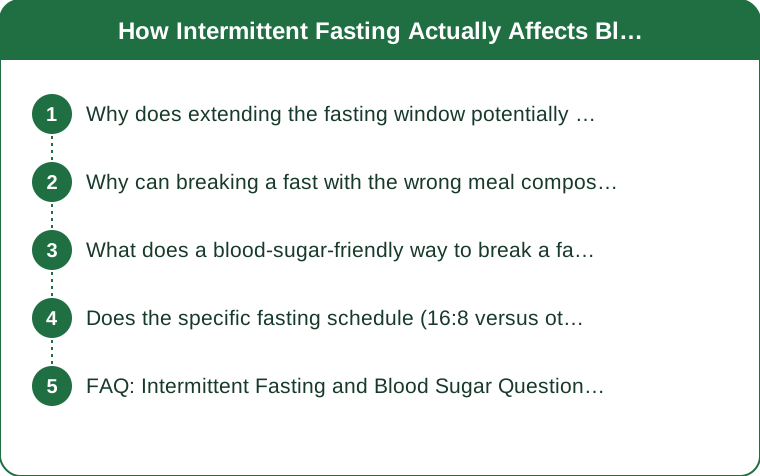
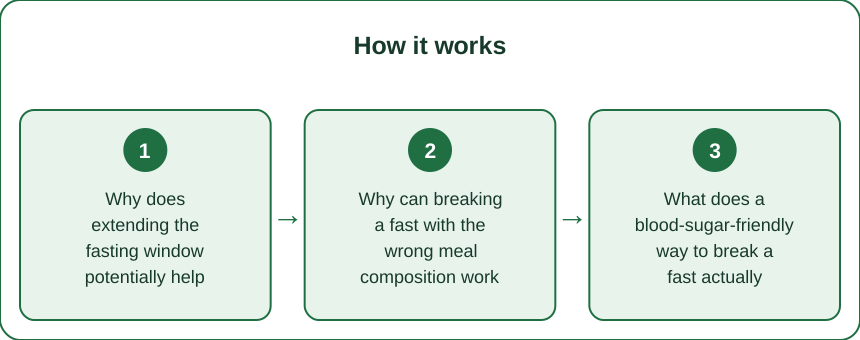
Why does extending the fasting window potentially help blood sugar regulation?
A longer overnight fast without food intake gives the body an extended period without needing to manage incoming glucose, and some research suggests this may improve insulin sensitivity over time — meaning the body may respond more efficiently to insulin’s signal to move glucose out of the bloodstream when eating does resume.
Why can breaking a fast with the wrong meal composition work against this benefit?
A large meal heavy in refined carbohydrates, eaten after an extended fast, can produce a larger blood sugar spike than the same food eaten in smaller portions throughout the day, partly because a longer gap without food can increase insulin sensitivity to the first meal’s glucose load in a way that, paradoxically, produces a sharper rather than gentler spike if that meal is poorly composed.

What does a blood-sugar-friendly way to break a fast actually look like?
Starting the eating window with protein, fiber, and healthy fat (rather than starting with something high in refined sugar or simple carbohydrates) tends to produce a more gradual, moderate blood sugar response — the order and composition of that first meal specifically matters more for fasting protocols than for a regular, non-fasting eating pattern.
Does the specific fasting schedule (16:8 versus other patterns) change the blood sugar effect?
Different intermittent fasting schedules likely have somewhat different effects, though most available research has focused on 16:8-style patterns — the general principle (meal composition within the window matters as much as the fast itself) applies across most schedule variations, even if the exact magnitude of benefit varies.
FAQ: Intermittent Fasting and Blood Sugar Questions, Answered
Is intermittent fasting safe for someone with existing blood sugar concerns?
Anyone with diabetes, prediabetes, or other blood sugar conditions should discuss intermittent fasting with a doctor before starting, since fasting protocols can interact significantly with blood sugar medication timing and dosing.
How long does it typically take to see a blood sugar benefit from intermittent fasting?
Measurable changes in markers like fasting glucose or insulin sensitivity are generally studied over periods of several weeks to a few months of consistent practice, not immediately after starting.
Does exercise timing relative to the fasting window matter for blood sugar too?
Yes — exercising during or shortly before breaking a fast can further support blood sugar regulation by increasing glucose uptake into muscle independent of insulin, adding a complementary benefit on top of the fasting schedule itself.
TL;DR:
- Extended fasting periods may improve insulin sensitivity over time for many people
- A poorly composed first meal after fasting can produce a bigger spike than more frequent smaller meals
- Starting the eating window with protein, fiber, and fat produces a gentler blood sugar response
- Anyone with existing blood sugar conditions should involve a doctor before starting a fasting protocol
Intermittent fasting’s blood sugar benefit is real but conditional — it depends on what happens inside the eating window at least as much as the length of the fast itself.
Keep Reading
This article is for general informational purposes only and is not medical advice. Always consult a qualified health professional for guidance specific to you.