One Bad Night, One Hungry Day: How Sleep Runs Your Blood Sugar
Quick Answer: Short sleep measurably reduces insulin sensitivity — studies restricting healthy adults to 4–5 hours have found impaired glucose handling within days. It also raises ghrelin (hunger) and lowers leptin (fullness), while making high-calorie food more rewarding to the brain. The day-after fix: anchor breakfast with protein, pair every carb with protein or fat, walk after meals, and cut off caffeine early so you don’t compound the cycle.
You know the day-after-bad-sleep menu. Carbs, urgently, in quantities, ideally something baked.
That’s not weak willpower. It’s measurable physiology, and understanding it is genuinely useful — partly because it takes the moral weight off, and partly because knowing what’s happening tells you exactly what to do about it.
Sleep deprivation scrambles next-day blood sugar handling and cranks the hunger hormones. Which makes bedtime one of the most underrated metabolic decisions you own.

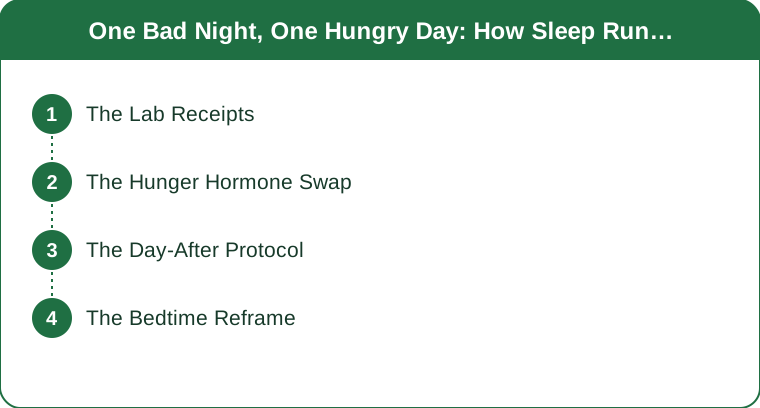
Does Poor Sleep Really Affect Blood Sugar?
Yes, and faster than most people expect.
Controlled studies that restricted healthy young adults to roughly 4–5 hours of sleep found their glucose handling temporarily impaired within days — insulin sensitivity dropping measurably after even a small number of short nights. In some of this research, participants’ glucose responses after less than a week of restriction resembled patterns seen in much older adults or in early insulin resistance.
The effect is reversible. Sleep normally for a few nights and glucose handling recovers. But it’s real, it’s fast, and it happens in people with no metabolic condition at all.
The practical translation: the 3pm crash after a bad night is chemistry, not character. Your body genuinely handled that lunch differently than it would have on seven hours.
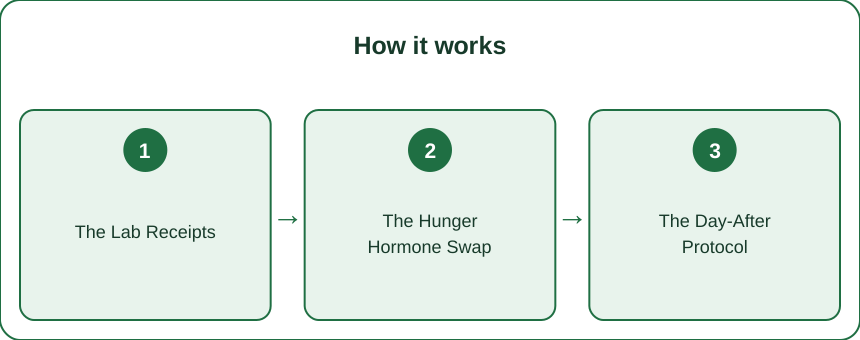
The Hunger Hormone Swap
Two hormones do most of the appetite signaling, and short sleep moves both in the unhelpful direction.
Ghrelin goes up. Ghrelin is hunger’s gas pedal — it’s the signal that tells you to eat. Sleep restriction raises it.
Leptin goes down. Leptin is the satiety brake, the signal that says you’ve had enough. Sleep restriction lowers it.
So you’re hungrier and less easily satisfied, simultaneously. That’s not a subtle combination.
And the food you want changes too. Brain-imaging studies show reward centers responding more strongly to high-calorie foods specifically after sleep restriction, while the prefrontal regions involved in restraint show reduced activity. Tired brains are biochemically tilted toward the pastry case, and the part of you that would normally argue is operating at reduced capacity.
Forewarned is at least partly disarmed. When you know the craving is a sleep artifact rather than a genuine signal, it’s easier to eat the protein-anchored version instead.

The Day-After Protocol
You slept badly. Here’s the damage-control sequence.
Protein-anchor breakfast. Aim for 25–30g of protein within an hour or two of waking — eggs, Greek yogurt, cottage cheese, a protein shake. This is your crash insurance. A carb-only breakfast on a sleep-deprived day sets up the exact blood sugar swing that produces the 11am hunger and the 3pm crash.
Chaperone every carb. Don’t eat carbohydrates naked today. Pair them with protein, fat, or fiber — apple with peanut butter, bread with eggs, rice with something substantial. This blunts the glucose rise meaningfully, and it matters more on a day when your insulin sensitivity is already reduced.
Walk after meals. Ten to fifteen minutes of easy walking after eating lowers the post-meal glucose peak, and it’s doing double duty on a tired day — it also helps with alertness better than another coffee would.
Hold caffeine discipline. This is the one people break, and it’s the one that compounds. The 4pm coffee that gets you through a tired afternoon taxes tonight’s sleep, which produces another tired tomorrow. Caffeine has a half-life of roughly five to six hours, so a 4pm cup still has a meaningful share circulating at 10pm. Cut off by early afternoon, even — especially — on the days you least want to.
Don’t try to fix it with a hard workout. Gentle movement helps. An ambitious training session on 4 hours of sleep tends to feel terrible and recover badly. Go for a walk instead.
The Bedtime Reframe
Zoom out from the single bad night and the picture gets more serious.
Chronic short sleep is associated with meaningfully higher risk of type 2 diabetes in large population studies. Sleep isn’t adjacent to metabolic health — it’s infrastructure underneath it, in the same tier as diet and movement rather than a nice-to-have alongside them.
Which leads to a slightly annoying conclusion: the most effective glucose intervention in this entire genre is boring. Seven-plus hours, on a consistent schedule, most nights.
No supplement, no eating window, no ordering of food groups at a meal comes close to what consistent sleep does for how your body handles glucose. The bedtime is the supplement.
The three things that move the needle most, if you’re trying to fix this: a consistent wake time (more important than a consistent bedtime), bright light within an hour of waking, and cutting caffeine off by early afternoon.
One caveat worth stating: if you’re consistently sleeping poorly despite doing the obvious things, or you snore heavily and wake unrefreshed, that’s worth raising with a clinician. Sleep apnea is common, frequently undiagnosed, and has its own substantial relationship with metabolic health. And if you’re managing diabetes or prediabetes, any change to your routine is worth discussing with whoever manages your care.
Myth vs Fact
Myth: Day-after cravings are a willpower failure. Fact: They’re a measurable hormonal shift — ghrelin up, leptin down — combined with reduced activity in the brain regions handling restraint. You’re negotiating with chemistry, not character.
Myth: You can catch up on sleep at the weekend. Fact: Weekend recovery sleep helps somewhat but doesn’t fully reverse the metabolic effects of a week of restriction, and the shifting schedule creates its own problems. Consistency beats catch-up.
Myth: Coffee fixes a bad night. Fact: It masks the alertness deficit without touching the glucose or appetite effects, and an afternoon cup taxes tonight’s sleep — which is precisely how the cycle sustains itself.
Myth: Only chronic sleep loss matters. Fact: Measurable changes in insulin sensitivity show up after just a few short nights in healthy adults. The good news is that they reverse just as quickly with normal sleep.
Mini FAQ
How much does one night of bad sleep affect blood sugar?
A single short night can measurably reduce insulin sensitivity the following day in healthy adults, though the effect is modest and reverses with normal sleep. It becomes more consequential when short nights repeat across a week or more.
Why do you crave sugar when you’re tired?
Two mechanisms stack: sleep restriction raises the hunger hormone ghrelin and lowers the satiety hormone leptin, and it also increases how rewarding your brain finds high-calorie food while reducing activity in the regions that handle restraint. You’re hungrier, less easily satisfied, and more drawn to exactly the wrong things.
Can better sleep improve insulin resistance?
Consistently getting adequate sleep is associated with better insulin sensitivity, and restoring normal sleep after a period of restriction reverses the short-term impairment. It’s not a standalone treatment for diagnosed insulin resistance, but it’s a genuine contributor alongside diet, movement, and any medical management.
TL;DR:
- Sleep restriction impairs glucose handling within days, even in healthy adults. It reverses with normal sleep.
- Ghrelin up, leptin down, reward centers more responsive to junk food — you’re hungrier and less satisfied.
- Day-after protocol: 25–30g protein at breakfast, never eat carbs alone, walk after meals, cut caffeine off early.
- The afternoon coffee that rescues today taxes tonight. That’s how the cycle compounds.
- Chronic short sleep is associated with higher diabetes risk. Seven-plus hours on a consistent schedule beats every supplement in this category.
Short nights scramble glucose and rig cravings by chemistry. Protein-anchor the morning after, chaperone the carbs, and treat bedtime as the metabolic lever it measurably is.
Keep Reading
This article is for general informational purposes only and is not medical advice. Always consult a qualified health professional for guidance specific to you.