The Vinegar Shot: Blood Sugar Hack or Wellness Theater?
Quick Answer: Apple cider vinegar before a carb-heavy meal does modestly blunt the post-meal glucose rise — the acetic acid slows stomach emptying and carbohydrate breakdown. The effect is real but small, and the studies are small too. Use 1 tablespoon diluted in a full glass of water before eating, never neat. Meal ordering and a 10-minute post-meal walk beat it, for free.
Every few months the vinegar shot returns to your feed, held aloft by someone with a glass jar and a great deal of confidence.
The annoying part, if you enjoy debunking things, is that there’s actual research underneath it. Small research. Modest effects. But a plausible mechanism and a handful of trials that point the same direction.
So here’s the honest accounting — what it does, what it doesn’t, and what quietly outperforms it.

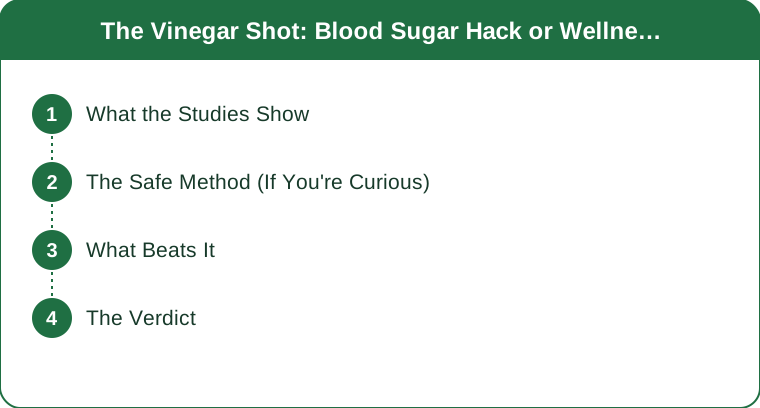
Does Apple Cider Vinegar Actually Lower Blood Sugar?
Modestly, yes — in the specific context of a carb-heavy meal.
Small trials have found that vinegar taken shortly before eating reduces the post-meal glucose spike compared with the same meal without it. The proposed mechanism is twofold: acetic acid slows gastric emptying, so carbohydrate arrives in the small intestine more gradually, and it appears to interfere with the enzymes that break starch down into glucose.
Two important caveats sit right next to that:
- The studies are small. We’re often talking about a couple of dozen participants over a single meal, not multi-year outcomes in thousands of people.
- The magnitude is minor. It’s a nudge to the curve, not a flattening of it. Nobody’s diabetes management plan gets rewritten around a tablespoon of vinegar.
Science grade: intriguing footnote, not headline.
How Do You Take It Safely?
If you’re curious, the method matters more than the dose:
- 1 tablespoon (15 ml) diluted in a full glass (240 ml) of water.
- Before the meal — roughly 5 to 15 minutes ahead, not after.
- Through a straw if you’re doing it regularly, to limit contact with your teeth.
- Rinse with plain water afterwards, and wait 30 minutes before brushing (brushing acid-softened enamel is worse than not brushing).
- Never neat, never at bedtime. Lying down after a slug of acid is how you find out you have a reflux tendency.
The trend’s genuinely documented harm isn’t mystical — it’s dental. Enamel erosion and throat irritation from undiluted vinegar shots are the real, boring risk.
Skip it entirely if: you have reflux or GERD, gastroparesis or any delayed-emptying condition, active dental erosion, or you take insulin, diuretics or medications where potassium levels matter. And if you’re managing diagnosed diabetes, this is a conversation with your doctor before it’s an experiment with a shot glass.

Myth vs Fact: The Vinegar Shot
Myth: ACV “resets” or “detoxes” your metabolism. Fact: It slows one digestive process a bit. Your liver and kidneys handle detoxification and have never asked for help.
Myth: More vinegar means a bigger effect. Fact: Studies used roughly 1–2 tablespoons. Higher doses mainly buy you throat irritation and enamel damage.
Myth: It burns fat. Fact: Weight-loss findings are thin, inconsistent, and small enough to be indistinguishable from the appetite effect of drinking a large glass of water before eating.
Myth: The “with the mother” versions work better for blood sugar. Fact: The active ingredient in these studies is acetic acid, which is in all of it. The mother is unpasteurised sediment, not a potency upgrade.
Myth: Gummies are an easier way to get the same benefit. Fact: Dose is often unclear, sugar is frequently added, and the mechanism depends on liquid acid arriving before food. The gummy is a candy with branding.
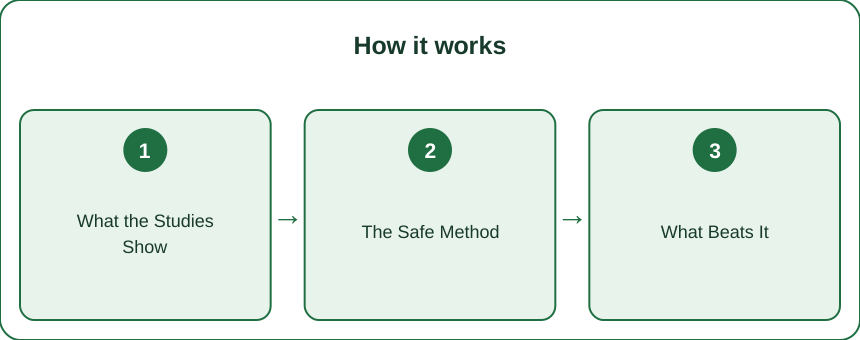
What Works Better Than a Vinegar Shot?
The unglamorous stuff, and it isn’t close:
Meal ordering. Eat vegetables and protein first, starch last. Trials on this show effects on post-meal glucose that are at least comparable to vinegar — and the change costs nothing, tastes like your normal dinner, and doesn’t touch your enamel.
Protein at every meal. Roughly 20–30 g per meal slows the same curve while also doing useful things for satiety and muscle.
The 10-minute post-meal walk. Possibly the highest return-per-minute habit in this entire category. Muscles pull glucose out of the bloodstream during light activity, no insulin negotiation required.
Fibre and whole grains over refined carbs — the version of this advice that’s been true for forty years and keeps being true.
Sleep. A short night measurably worsens next-day glucose handling. No shot compensates for that.
So What’s the Verdict?
If you like the taste and you drink it diluted before a pasta dinner: fine. It’s a small, honest tool with a plausible mechanism and low cost.
If you’re grimacing your way through sour water every night hoping for transformation: reassign that discipline to the walk. You’ll get more out of it and your teeth will thank you.
Wellness theater only becomes a problem when it replaces the effective stuff. As a supporting actor, vinegar keeps its small role.
When to see a professional: persistent thirst, unexplained weight change, frequent urination, or fasting glucose readings that concern you all warrant an actual test rather than an actual tablespoon.
How long before a meal should I drink apple cider vinegar?
About 5 to 15 minutes before eating. The mechanism depends on the acid being present when carbohydrate arrives, so after-dinner timing misses the point entirely.
Can I use other vinegars instead of apple cider vinegar?
Yes — the active component is acetic acid, which is in white, red wine and balsamic vinegar too. A vinaigrette on the salad you eat first accomplishes roughly the same thing and tastes considerably better.
Will ACV damage my teeth?
Undiluted, repeatedly, yes — enamel erosion is the best-documented harm of the trend. Dilute in a full glass of water, use a straw, rinse with plain water afterwards, and don’t brush for 30 minutes.
TL;DR:
- Real mechanism, modest effect, small studies. A footnote, not a fix.
- Dose: 1 tbsp in a full glass of water, 5–15 minutes before a carb-heavy meal.
- Never neat, never at bedtime, straw and rinse if you do it often.
- Skip it with reflux, gastroparesis, dental erosion, or on relevant medications.
- Meal ordering, protein, and a 10-minute post-meal walk beat it — for free.
- Enjoy it as a garnish on good habits, never as a substitute for them.
Keep Reading
This article is for general informational purposes only and is not medical advice. Always consult a qualified health professional for guidance specific to you.